
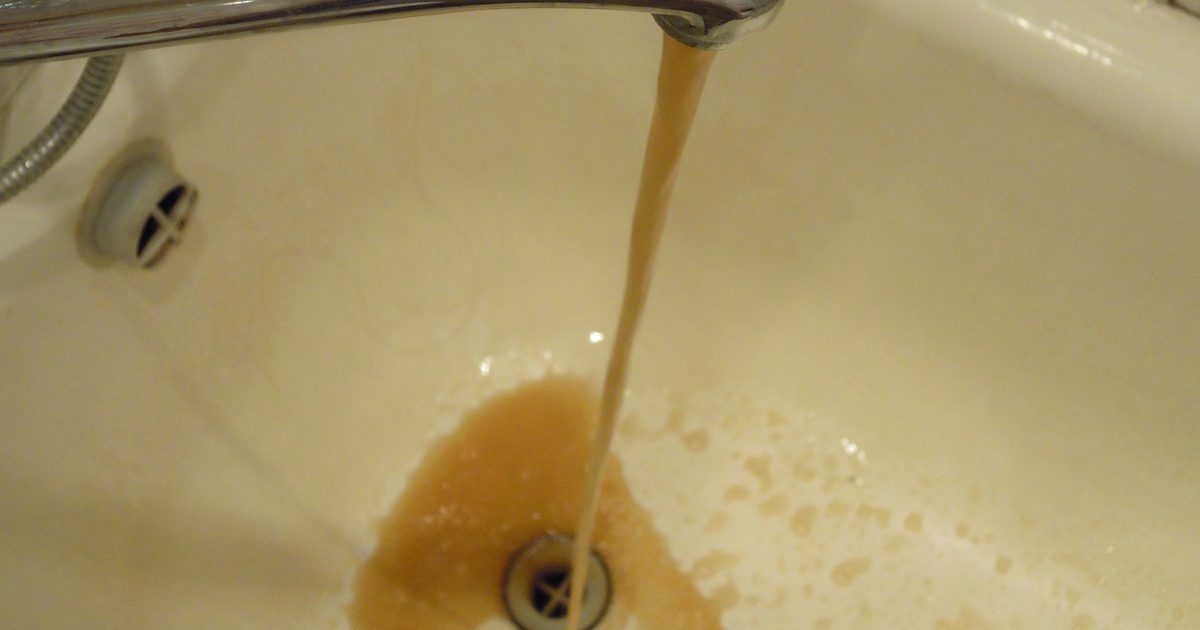

Sand or sediment in Florida well water almost always traces back to one of six causes: a failing pump intake screen, a pump that has dropped into the gravel pack, a karst collapse opening new void space, scaled or waterlogged pressure tank shedding flakes, corroded galvanized drop pipe or supply pipe, or a recently drilled well still flushing fines. Each has a distinct signature, and the fix runs from a $35 inline sediment filter to a full pump pull or well rehabilitation. Diagnose before you treat.
Across our Central Florida service area, the call we get most often during the dry season (March through June) and immediately after heavy rain events is "my well water suddenly has sand." It is not one cause, and the wrong fix wastes money. A homeowner who installs a 5-micron whole-house sediment filter to catch dropped-pump sand will burn through cartridges every 4 to 6 days and never solve the actual problem.
This guide walks the six causes we see across Marion, Alachua, Citrus, Lake, Orange, Seminole, Volusia, and Polk counties, the diagnostic signal that points to each, and the real fix. Quality Filters And Pumps has serviced Florida wells for 15+ years. Chase Norris holds FL Water Well Contractor License #7494.
What "Sand" or "Sediment" Actually Means in a Florida Well
Before the diagnosis, the vocabulary. What homeowners call "sand" in their water is one of several different particle types, and the identification narrows the cause.
Sharp, gritty quartz sand (white, tan, gray). This is true aquifer sand: silica or quartz grains drawn through the pump screen from the formation or gravel pack. Most common in surficial-aquifer wells in Central Florida. In Floridan wells, less common but a serious sign when present.
Soft brown or red flakes that smear between fingers. Iron oxide or iron-bacteria floc. Not aquifer sand. The fix is upstream chemistry treatment, not pump work. See our iron and sulfur diagnostic.
White or tan rock-like flakes that crush easily. Calcium carbonate scale shedding from a pressure tank, water heater, or pipe interior. Common in Central Florida's hard Floridan water (15 to 40+ gpg hardness).
Brown to black flakes that look like dirt. Decaying galvanized pipe or rust. Older wells with galvanized drop pipe or galvanized supply piping shed this as the pipe wall breaks down from the inside.
Cloudy "milky" water with no visible particles. Air entrainment, not sediment. Likely a check valve issue or pump short-cycling. See our pump running constantly diagnostic.
If you can put a glass of the affected water on a flat surface and let it sit 30 minutes, the settling pattern tells you a lot. Sharp grit on the bottom is aquifer sand. Floating brown floc is iron. Rock flakes on the bottom that crumble are scale. Brown discoloration that does not settle is dissolved iron.
Recommended Method: Visual Diagnosis to Likely Cause to First Fix
| What you see and when | Most likely cause | First fix |
|---|---|---|
| Sharp gritty sand, started after pump replacement or work | Pump screen damaged or wrong size; pump may be set too low | Pull pump, inspect screen, raise set depth, possibly add larger gravel pack |
| Sand suddenly appears, no recent work, dry season | Water table dropped, pump now drawing fines from formation | Lower pump or temporarily reduce duty cycle; longer-term may need deeper well or upper-aquifer abandonment |
| Sand or fines after heavy rain or after nearby drilling | Karst feature opening void space, surficial-aquifer mixing | Pull pump, inspect well, check WMD well-completion log, may need rehabilitation |
| White/tan rock flakes, gradual increase over 2 to 5 years | Pressure tank scale, water heater scale, or pipe scale shedding | Flush and inspect pressure tank; descale or replace water heater; install whole-house softener if hardness over 10 gpg |
| Brown/black flakes plus declining pressure, well over 15 years old | Galvanized drop pipe corroding from inside | Full drop pipe replacement during next pump service |
| Sand for first 2 to 8 weeks after new well drilled | Normal well development flushing fines from gravel pack | Run pump 30 to 60 min daily into a sediment trap, retest after 4 weeks |
For the pump-side decision tree, see the pump troubleshooting pillar. For long-term repair-vs-replace context on aging wells, see repair vs replace old Florida wells.
Sand in your Florida well water? Same-day diagnostic across Central Florida. Written quote, no surprises. Call (352) 268-9048 or request a callback.
Cause 1: Failing or Wrong-Size Pump Intake Screen
Every submersible pump has an intake screen sized to keep formation sand out while letting water through. Screens are spec'd by slot size (typically 10 to 80 slot, where the number is thousandths of an inch). Pick the wrong slot size for the formation, and the pump pulls sand. Older pumps with corroded or torn screens do the same thing.
The diagnostic signal is timing. Sand that started right after a pump replacement or right after recent well work points to a screen-and-pump issue. The fix is a pump pull, screen inspection, and either repair or replacement with the correct slot for the formation. On older wells, we often pair the screen replacement with raising the pump 10 to 20 feet up the casing, away from the gravel pack bottom.
This is a $700 to $1,400 fix on a 200 to 300 foot Floridan well, assuming the pump itself is salvageable. If the pump is at the end of life and the screen is failing, replace both and plan for a full pump-and-screen swap rather than a screen-only repair.
Cause 2: Pump Set Too Low or Dropped Into Gravel Pack
A submersible pump should hang 10 to 20 feet above the bottom of the well casing, suspended in the water column. If the pump or its support cable fails, the pump can drop, and once it sits in the gravel pack at the well bottom, every cycle pulls fines.
This is a quiet failure mode. You will not hear it. The first signal is sand. The second is reduced flow or air entrainment. The fix is a pump pull, inspection, and reset at the correct depth. If the safety cable failed, replace it. If the drop pipe corroded enough that the pump dropped on its own weight, the whole drop pipe needs to come out and be replaced.
This is a more involved service than a screen swap. Expect $1,200 to $2,400 depending on well depth and what came out with the pump. Older Floridan wells with galvanized drop pipe are the highest risk.
Cause 3: Karst Collapse or Aquifer Mixing
Western Marion, Citrus, and parts of Alachua sit on highly soluble limestone. Sinkholes, cavities, and void-space changes are part of the geology. A nearby pumping event, a drought followed by heavy rain, or new construction in the area can shift the connection between the surficial aquifer and the Floridan, mixing water from two zones and introducing sediment that was not there last year.
The signal is sand or cloudy water that appears after a regional event (drought break, hurricane, large nearby pumping). The fix depends on what is happening. Sometimes a pump pull and screen replacement is enough. Sometimes the well needs rehabilitation (acidizing to reopen plugged sections of the aquifer), additional grouting to seal off the surficial-zone leak, or in rare cases a new well in a more stable position. See the karst country drilling article for the full geology picture.
Pull the WMD well-completion log if you have not seen it. Karst-zone wells often have extra grouting requirements that show up on the original record and tell you what the well was designed to handle.
Cause 4: Pressure Tank Scale, Water Heater Scale, or Pipe Scale
This is the cause that confuses the most homeowners because it has nothing to do with the well. Central Florida's hard Floridan water (15 to 40+ gpg) precipitates calcium carbonate scale on every surface that holds heat or that the water sits in. Over 3 to 8 years, that scale builds, then sheds. The white-to-tan flakes you find at faucet aerators or in the bottom of a kettle are usually water-heater or pressure-tank scale, not aquifer sand.
The fix is upstream of the symptom. Drain and inspect the pressure tank annually. Flush the water heater every 6 to 12 months. If hardness is over 10 gpg (most of Central Florida), install a whole-house softener after the iron filter. The combined install is on our filtration service page and the filtration pillar.
A 5-micron inline sediment filter at the entry to the house will catch existing scale flakes while the upstream fix takes effect. Cartridge runs $5 to $12 and lasts 1 to 3 months on a moderately scaled system.
Cause 5: Galvanized Pipe Corroding From Inside
Pre-1990 Central Florida wells often used galvanized steel drop pipe and galvanized supply pipe to the house. After 15 to 30 years in hard, slightly acidic Floridan water, the inside of galvanized pipe corrodes, sheds rust flakes, and reduces inner diameter. The signal is brown-to-black flakes plus reduced water pressure at all fixtures simultaneously.
There is no quick fix. The pipe has to come out. Drop pipe replacement during the next pump service runs $400 to $1,200 added to base pump work depending on length and pipe material chosen (Schedule 80 PVC, polyethylene, or stainless). House-side supply pipe replacement is a separate plumbing project, $1,800 to $6,500 depending on layout.
If your well or house plumbing is over 20 years old and you see brown flakes, get the pipe inspected. The flakes get worse, never better.
Cause 6: New Well Still Developing
A brand-new well in Central Florida pulls sand for 2 to 8 weeks while the gravel pack and adjacent formation settle and the fines get flushed out. This is normal well development and is the reason every WMD-permitted construction includes a development pumping protocol on the well-completion report.
The fix is patience plus a 20-micron sediment trap on the supply line. Run the pump 30 to 60 minutes daily into the trap, replace the cartridge weekly, and the sand load should taper sharply by week 4 and disappear by week 8. If you are at month 3 and still pulling sand, that is no longer "new well development." Call a licensed contractor for a screen-and-formation inspection. See our new well drilling permits guide for the development context.
Call a Professional If...
- You see sand suddenly in a well that has run clean for years. Sudden change always points to a fixable problem upstream. Diagnose, do not just filter.
- The sand is accompanied by reduced pressure at all fixtures. Likely either pipe corrosion or a partial pump failure. Both benefit from a contractor inspection before the situation deteriorates.
- The sand started after a regional event (drought, hurricane, large nearby pumping, new construction nearby). Karst zones can shift water-bearing connections. Investigate before assuming pump failure.
- Your well is over 20 years old and you see brown flakes. Galvanized corrosion gets worse, not better. Schedule a drop-pipe inspection and budget for replacement.
- You have a brand-new well still producing sand after 8 weeks. That is no longer normal development. Call the licensed contractor who drilled the well for warranty service.
- You are about to install a whole-house sediment filter to "fix the sand." A filter is the symptom-treatment, not the cause. If your cartridges are clogging in days instead of months, you are masking a problem that will turn into a bigger fix.
- You see sand plus cloudy water plus a slight chemical or sulfur smell that was not there before. Water-quality changes alongside sediment can signal contamination from surface or surficial-aquifer mixing. Pull a full lab panel. See our Florida well water testing guide.
Sediment diagnosis you can trust. 15+ years across Central Florida. FL License #7494. Same-day visits. Call (352) 268-9048 or contact us.
The Stopgap: Sediment Filter Sizing While You Diagnose
While you are working through the cause, a temporary whole-house sediment filter at the pressure tank outlet keeps sand out of your appliances and fixtures. Two notes on sizing:
Use a graded filter, not a 5-micron-only. A 5-micron cartridge clogs in days if the well is producing real aquifer sand. A spin-down sediment trap (50 to 100 micron) followed by a 20-micron cartridge in a Big Blue housing lasts much longer and protects appliances effectively. Cartridge cost $8 to $25, housing $80 to $180.
Do not install the sediment filter ahead of the pressure tank. The pressure tank needs to fill at full pump flow. Putting a partial-clog cartridge upstream of the tank causes pump short-cycling, which then causes a pump failure on top of the sand problem you started with.
The sediment filter is the bandage. The diagnosis is the cure. Both are useful, but they serve different purposes. Our filtration repair service handles both the diagnostic and the install.
FAQs: Sand and Sediment in Florida Well Water
Is sand in well water dangerous? Sand itself is not a health risk. The risk is what it signals. If sand is coming from a screen failure or a pump that dropped into the gravel pack, the same opening that lets sand in also bypasses the disinfection barriers that keep surface water out of the well. If you see sand alongside any taste, odor, or color change, pull a bacterial test before drinking.
Will a whole-house sediment filter solve the problem? A filter catches the sand on the way to the house, which protects appliances and fixtures, but it does not solve the upstream cause. If you find yourself replacing 20-micron cartridges every 2 to 4 weeks, the well needs service. Cartridges that last 3+ months mean the upstream system is in good shape.
How long does a "new well" produce sand? Normal development tapers in 2 to 8 weeks. Past week 8, the well needs a contractor inspection. Florida-licensed contractors include development pumping in the original install scope under FL Chapter 62-532.
Does a water softener cause flakes in my water? A softener does not produce flakes in normal operation. If you see white, salty-tasting deposits after softener installation, the regeneration brine is bleeding through (bypass valve issue or fouled resin). If you see hard scale flakes, the issue is upstream of the softener, or the softener is undersized for the hardness load.
Should I shock-chlorinate my well to clear sediment? No. Shock chlorination addresses bacterial contamination. It does not move sand. If your well is producing sediment, shock chlorination is the last step (after pump service and well rehabilitation), not the first.
Can I run my well dry if I have a sediment problem? Running the well dry damages the pump motor in minutes. The right approach is to diagnose with the pump running normally, not to push the system into dry-run conditions to "see what happens." Our diagnostic protocol is on the water testing service page.
Free Diagnostic Visit Across Central Florida
Quality Filters And Pumps has diagnosed and fixed sediment and water-quality issues across Marion, Alachua, Citrus, Lake, Orange, Seminole, Volusia, and Polk counties for 15+ years. Chase Norris, FL License #7494. Every visit starts with a diagnostic, not a sales pitch. Call (352) 268-9048 or contact us. Service area pages: Orlando, Gainesville, Ocala, Lakeland, Deltona. Related reading: FL well water testing guide, iron and sulfur diagnostic, signs your pump is failing, pump troubleshooting pillar, about us, FAQ, financing.