
Whole-house well water filtration in Central Florida is a sequencing problem, not a single-product problem. Floridan Aquifer water typically arrives at your wellhead carrying some combination of dissolved iron, hydrogen sulfide, hardness, sediment, and (in shallower surficial wells) low pH. A properly sized system stages oxidation, filtration, softening, and reverse osmosis in the right order for your actual water. This article walks the sequencing logic, the equipment options, and the install decisions a Florida-licensed contractor makes on a real job.
Why Sequence Matters
Every stage of water treatment makes the next stage's job easier or harder. Putting a softener in front of an iron filter fouls the softener resin within months. Putting reverse osmosis in front of a softener trashes the RO membrane on hard water. The right sequence on a typical Central Florida well runs roughly: sediment prefilter, then oxidation and catalytic media for iron and sulfur, then softening, then point-of-use reverse osmosis for drinking. The exact order on your house depends on what your water actually contains, which is why every install we do starts with an on-site test.
Typical Central Florida Well Water Ranges
Before sequencing, know what you are sequencing for. Across the Floridan and surficial wells we have tested in Marion, Alachua, Orange, Lake, Polk, Volusia, and Seminole counties, the ranges that show up most consistently are:
- Hardness: 15 to 40 grains per gallon on Floridan wells, occasionally higher in deeper Marion and Alachua zones. Surficial wells run lower, often 5 to 15 gpg.
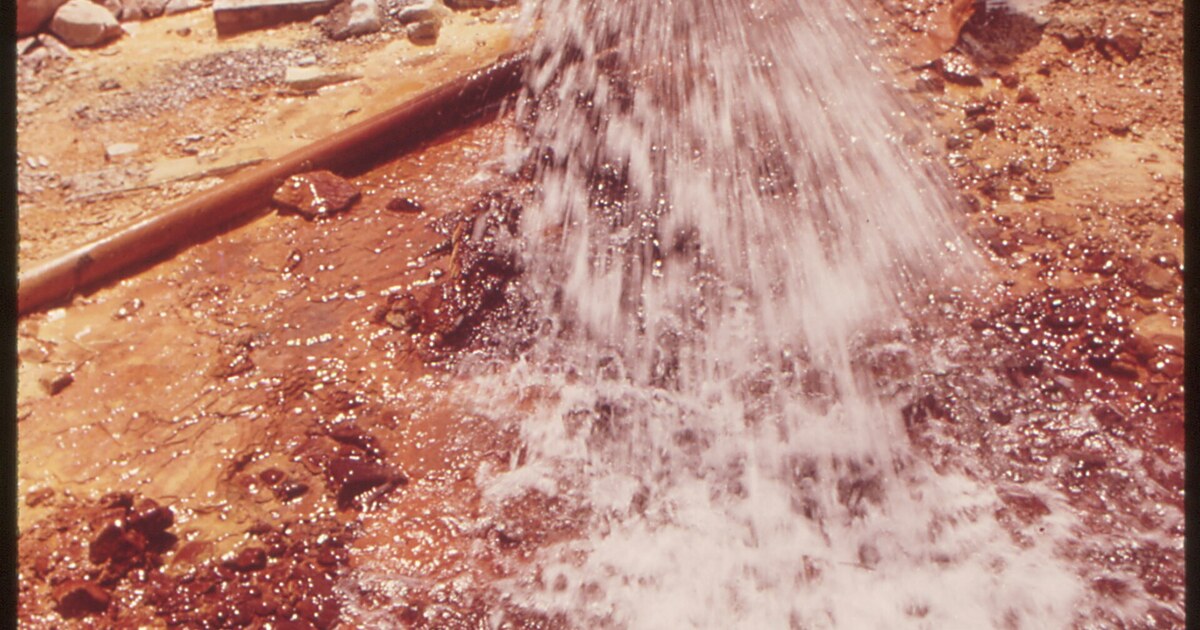
- Dissolved iron (ferrous): 0.3 to 3 ppm is the common band on Floridan wells; eastern Orange County surficial wells can hit 5 to 8 ppm. Anything over 0.3 ppm is the EPA secondary MCL and will stain laundry and fixtures.
- Hydrogen sulfide: 0.1 to 2 ppm on most Floridan wells, strong rotten-egg odor starting around 0.5 ppm. Confined sulfate-reducing-bacteria zones in deeper limestone can push that higher.
- pH: Floridan wells run neutral to slightly alkaline (7.2 to 8.2). Shallow surficial wells in Volusia, east Orange, and parts of Lake County run acidic (5.5 to 7.0) and cause copper pinhole leaks.
- TDS: Typically 200 to 400 mg/L on Floridan wells, with chloride and sulfate as the dominant species. Coastal Volusia wells can pick up brackish influence at depth.
- Bacteria: Should be zero coliform on a properly sealed well. Hits after heavy rain, hurricane events, or septic-system failure are common in older wells with surface-water intrusion.
These are bands, not promises. Your well sits in its own micro-context: aquifer zone, casing depth, age, surrounding land use, and septic proximity all move the numbers. Which is why the first thing on every install is the test. See our iron and sulfur in Marion and Alachua County article for the regional-specific deep dive.
Stage 1: Sediment Prefilter
A sediment prefilter (typically a 5 to 20 micron pleated or spun cartridge in a clear 10 or 20-inch housing) catches sand, scale fragments, and fine particulate before water reaches the more expensive downstream equipment. On Central Florida well water, the sediment filter is the cheapest part of the system and the one that fails most visibly: when it clogs, pressure drops at every fixture. We oversize the housing on most installs so that filter changes drop to every 6 to 12 months instead of monthly.
Stage 2: Iron and Hydrogen Sulfide Removal
This is the workhorse stage for most Central Florida well water. Two competing technologies dominate:
Air-Injection Oxidation with Catalytic Media
An air-injection system holds a small air pocket at the top of the treatment tank. As water passes up through the pocket, dissolved ferrous iron oxidizes to insoluble ferric iron and hydrogen sulfide oxidizes to elemental sulfur. The oxidized particles are then trapped in catalytic carbon or birm media below. The system backwashes itself on a timed cycle (typically every 2 to 4 days) and refreshes the air pocket from an internal vent. No chemical feed, no compressor, no scheduled chemistry to mix. This is our default recommendation for combined iron and sulfur removal up to roughly 5 ppm iron and moderate hydrogen sulfide.
Chemical Oxidation (Chlorine or Peroxide Feed)
For very high iron (over 8 ppm) or persistent bacterial hits, a metered chemical feed of chlorine or hydrogen peroxide upstream of the filtration tank provides faster, more complete oxidation than air injection alone. The tradeoff is operational complexity: the feed needs scheduled chemistry refills and the chemistry needs neutralization (usually with downstream activated carbon) before the water reaches the house. We install chemical-feed systems where the water profile requires them, not as a default.
Stage 3: Calcite Neutralizer (Low pH Wells)
Surficial-aquifer wells in some pockets of Volusia, east Orange, and parts of Lake County can run pH in the 5.5 to 7.0 range. Low pH water is corrosive to copper, leaves blue-green staining on fixtures, and can drive pinhole leaks in copper supply lines over time. A calcite neutralizer is a tank of crushed marble that dissolves slowly into the water, raising pH toward neutral. The calcite media is consumed gradually and needs topping off every 6 to 24 months depending on flow.
If you have low-pH water, the calcite neutralizer typically sits at the front of the treatment train, before iron and sulfur removal. Raising pH first improves iron oxidation efficiency.
Stage 4: Water Softener
The softener exchanges calcium and magnesium hardness for sodium (or potassium chloride if the household has sodium concerns). For Central Florida well water testing in the 15 to 30 grains per gallon range, a properly sized softener is the single biggest quality-of-life improvement: no scale on aerators, soap lathers, water heaters last longer, glassware comes out clean.
Softener sizing math: hardness in grains per gallon, multiplied by daily gallons used by the household (typically 60 to 80 gallons per person per day), multiplied by a 1.3 safety factor for regeneration efficiency, divided by the resin bed's rated capacity per cubic foot. For a four-person household on 20 grains per gallon water, the typical sizing lands in the 48,000 to 64,000 grain range. Bigger is not better; an oversized resin bed wastes salt and water.
Stage 5: Point-of-Use Reverse Osmosis (Drinking Water)
RO is the only consumer technology that consistently removes dissolved solids, lead, arsenic, fluoride, nitrates, and PFAS to bottled-water quality. We install RO at the kitchen sink for any household that wants better drinking water than what comes out of the softener. RO systems also tee over to refrigerator dispensers and ice makers when the run distance is short enough; longer runs get a permeate pump.
Modern RO systems we install run a one-to-one or better recovery ratio, which is a meaningful improvement over the four-to-one wasteful systems sold in the 2000s.
Recommended Sequence by Water Profile
| Water profile | Recommended sequence |
|---|---|
| Hard water only, no iron, no sulfide | Sediment, softener, optional under-sink RO |
| Hard water with mild iron (under 1 ppm) | Sediment, softener (sized for combined load), RO |
| Iron 1-3 ppm with light sulfide | Sediment, air-injection oxidation + catalytic media, softener, RO |
| Iron 3+ ppm with strong rotten-egg smell | Sediment, air-injection oxidation, catalytic carbon, larger softener, RO |
| Low pH (under 7.0) with copper staining | Calcite neutralizer, then iron/sulfur stage if needed, then softener, RO |
| Bacterial hits after rain or flooding | Shock chlorination, continuous UV upstream of softener, full water test |
Test First, Always
The leading cause of underperforming whole-house systems is sizing off a regional average instead of the actual water at your wellhead. Every install we do starts with an on-site test: iron, hardness, hydrogen sulfide, pH, TDS, and temperature. We send a lab sample for bacteria, arsenic, radium, or PFAS when warranted. The test takes about thirty minutes and we walk you through every number before we recommend equipment. For background on what to test for, see our Florida well water testing guide.
Realistic 2026 Cost Ranges for Whole-House Filtration
Honest ranges for Central Florida residential systems in 2026, sized on actual on-site water tests:
- Softener only (hard water, no iron or sulfur): low to mid four-figure range installed, depending on capacity and brand.
- Iron and sulfur with air-injection oxidation plus softener (typical Floridan Aquifer well): mid four-figure to high four-figure range installed.
- Full surficial-aquifer train (calcite neutralizer, sediment, iron and sulfur, softener): mid four-figure to low five-figure range, driven mostly by the neutralizer tank and the bigger media load.
- Under-sink reverse osmosis (kitchen drinking water polish): low four-figure range as a standalone install; less when bundled with a full whole-house system.
- Chemical-feed system (very high iron, bacterial hits): mid four-figure to low five-figure range, depending on metering pump and downstream carbon stage.
These bands are not promises. They are what our quotes have been landing in across recent installs in Marion, Alachua, Orange, Lake, Polk, Volusia, and Seminole counties. The only useful number is the written quote we produce after a site visit and water test. We do not size systems off photos or phone descriptions.
Installation Considerations
A few things that often surprise homeowners:
- Drain access. Whole-house filtration tanks backwash, which means each tank needs a drain line. We size and route drains during the site visit, not on install day.
- Bypass valves. Every stage of the system should have a bypass for service. We install three-valve bypasses on every install so we can service one stage without taking the whole house offline.
- Power and salt access. Softeners need a power outlet within reach of the control valve and reasonable physical access for salt delivery. We work out placement during the consult.
- Outdoor placement. Many Central Florida homes put filtration in the garage or in a small enclosure outside. Direct sun and high temperatures shorten equipment life; we shade or relocate when needed.
Maintenance, Documented
Every install we leave includes a written maintenance schedule: when to refill salt, when to swap sediment cartridges, when to replace media, when to retest water. The leading cause of system underperformance years later is missed maintenance, not bad equipment. For homeowners who would rather not track it, our maintenance contracts handle it on a schedule.
Surficial vs Floridan: The Two Wells Need Different Treatment
One of the more common confusions we walk homeowners through is the difference between a surficial-aquifer well and a Floridan-aquifer well, and why the same treatment train does not fit both. The surficial aquifer is the shallow groundwater that sits above the limestone, typically 20 to 80 feet down across Central Florida. It is fed directly by rainfall, so its chemistry shifts with the seasons. The Floridan is the deeper confined limestone aquifer, 150 to 400+ feet down depending on county, and its chemistry is far more stable.
The practical implication: surficial wells in Volusia, east Orange, and parts of Lake County often run lower pH (5.5 to 7.0), lower hardness (5 to 15 gpg), variable iron (sometimes very high in eastern surficial pockets), and occasional bacterial hits after heavy rain. A treatment train for a surficial well usually starts with a calcite neutralizer, then sediment, then iron and sulfur removal if needed, then a smaller softener. The softener does not have to be sized for 40 grains of hardness, but the neutralizer is non-negotiable because acidic surficial water will pinhole copper supply lines within a decade.
Floridan wells run neutral-to-alkaline pH (no neutralizer needed), high hardness (15 to 40 gpg, big softener required), moderate iron (often 1 to 3 ppm with air-injection oxidation), and frequent hydrogen sulfide (catalytic carbon downstream). The Floridan-well train is bigger and the equipment cost higher, but the chemistry is predictable enough that we can dial it in once and walk away for years of stable operation.
The mistake homeowners make is treating the well as if all groundwater is the same. We test first, identify which aquifer the well actually draws from based on the completion record and the water chemistry, and then size from there. Background reading on testing protocols: see our Florida well water testing guide and well water vs city water.
Call a Professional If
- You have not tested your well water in the last 12 months.
- Water has visibly changed color, taste, or smell.
- Existing softener is no longer keeping up with iron or sulfur staining.
- Your filtration system is 12+ years old.
- You are buying a property with a well of unknown service history.
- Anyone in the household has elevated blood lead, pregnancy considerations, or kidney issues.
Background Reading
See the well water filtration pillar guide, iron and sulfur in well water, Florida well water testing, and well water vs city water. Service pages: water filtration, filtration repair, water testing, and maintenance contracts.
City-specific filtration pages: Ocala, Gainesville, Orlando, Leesburg, Mount Dora, Eustis, Clermont, and Lakeland. About the team: about us. Payment options: financing.
Free On-Site Water Test
Call (352) 268-9048 or contact us to schedule a free on-site water test across Central Florida. Real numbers. Honest recommendations. Written quote before any work.